











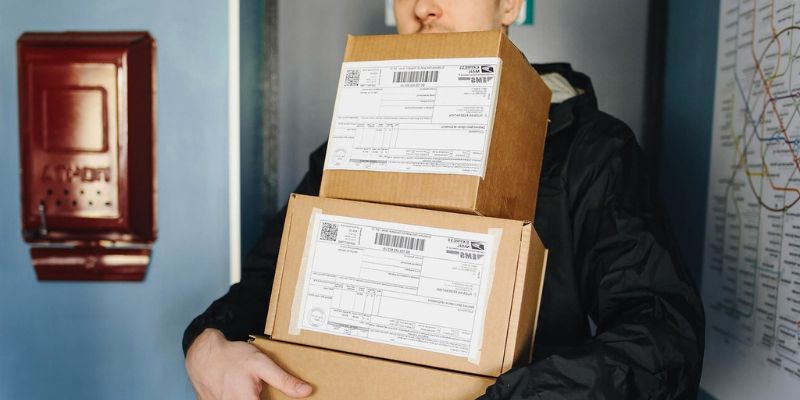
ARMO issued clarifications on Tuesday regarding the fiscal and logistical treatment of non-EU parcels, following public debate on the impact of their taxation, saying several claims circulating in the public space are based on incorrect assumptions and incomplete data.
The association said that in 2025 around 80m non-EU parcels had Romania as their final destination, of which less than 10% landed directly in the country. The remainder entered the European Union through regional logistics hubs in other member states, in line with standard practices in the sector. Limiting analysis only to parcels that arrive directly in Romania significantly distorts the overall picture, ARMO said.
„No Evidence of a Structural Decline”
Claims of a collapse in cargo traffic are not supported by publicly available data, according to the association. It said there is no evidence of a structural decline caused by the introduction of a logistics fee. Estimates referring to losses of hundreds of millions of euros are also based on erroneous assumptions, including the application of customs duties to parcels with a declared value below 150 euros. ARMO said such figures are not backed by official data or verifiable methodologies.
The association described as false the premise that Romania applies customs duties to parcels with a declared value under 150 euros. These shipments are currently exempt from customs duties under existing European Union (EU) legislation. This exemption has been widely cited at EU level as one of the drivers of unfair competition from non-EU companies.
As a result, the EU has agreed to remove this exemption and introduce a flat customs duty of 3 euros per product, separate from the logistics fee announced by the European Commission. The measure is scheduled to take effect on July 1, 2026.
„Claims that Romania is Losing Customs Revenues are Unfounded”
ARMO said claims that Romania is losing customs revenues are unfounded, noting that customs duties are EU own resources rather than national budget revenues. Romania cannot lose income it has never collected and which would not accrue to its budget in any case, the association said.
In parallel, the EU has agreed to introduce a logistics fee starting in November 2026, citing the continuously rising volume of low-value parcels from outside the bloc and the pressure their processing places on national customs authorities.
ARMO noted that the implementing rules for the logistics fee have not yet been adopted and called for their swift approval to ensure predictability for economic operators, uniform application nationwide and the avoidance of divergent interpretations or speculative estimates regarding the measure’s impact.
Not an Isolated Initiative
Similar measures have already been introduced or are in the process of being implemented in other EU member states, confirming that this is not an isolated Romanian initiative but part of a coordinated European approach to addressing the challenges created by the massive inflow of low-cost parcels from third countries and their effect on competition within the EU market.
The association also said that public discussion has confused two different import procedures: H7, which applies to low-value parcels, and H1, which applies to standard commercial imports. For small parcels, value-added tax is paid by consumers at the time of purchase and subsequently transferred to the state. For commercial imports, VAT is paid at customs in the country of import.
The logistics fee applies only to low-value parcels and not to commercial imports. As a result, claims that the state no longer collects VAT are incorrect, ARMO said, adding that VAT continues to be collected on parcels with a declared value below 150 euros regardless of whether they land in Romania or in another EU member state. Imports under the H1 procedure cannot be affected by the introduction of the logistics fee, as the measure does not apply to that category.
„Imports Under the H1 Procedure Would Be Beneficial for Romanian Consumers”
ARMO said that, if confirmed, an increase in imports under the H1 procedure would be beneficial for Romanian consumers, as it would allow customs authorities to exercise effective control over goods in terms of compliance, safety and standards, contributing to consumer protection and fair competition.
Information circulating in the public space relies on false premises and leads to unrealistic conclusions that do not withstand even a basic fiscal analysis, ARMO said. The association said it supports informed public debate on e-commerce and related tax issues and firmly rejects the spread of inaccurate information that misleads the public.