



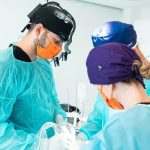






The Romanian Society of Aesthetic Surgery (SRCE) is attentively reviewing the medical case recently brought into the public spotlight, involving accusations that a well-known plastic, aesthetic, and reconstructive microsurgery specialist allegedly exceeded his professional competence. The claims are tied to his performance of a rhinoplasty combined with septoplasty and nasal turbinate remodeling.
„We wish to emphasize that training in the specialty of Plastic, Aesthetic and Reconstructive Microsurgery is particularly complex, multidisciplinary in nature, and covers an extremely wide range of procedures and surgical techniques, with the main purpose of reconstructing anatomical units and tissues, restoring or optimizing their function throughout the entire body. According to the “Training Curriculum in the Specialty of Plastic, Aesthetic and Reconstructive Microsurgery” – developed and published by the Ministry of Health, the link to which is provided below, we quote the following: https://rezidentiat.ms.ro/curricule/2018/chirurgie_plastica_estetica_si_microchirurgie_reconstructiva_2018.pdf”, a recent press release reveals.
Specialty Definition
Plastic, Aesthetic and Reconstructive Microsurgery is an interdisciplinary surgical specialty that treats patients with congenital or acquired defects or deformities. Acquired defects may result from systemic diseases, trauma, burns, tumor pathologies, degenerative conditions or aging. The objective of the specialty is to restore or improve function and appearance through corrective and/or reconstructive procedures.
Another particular feature of this specialty is the extreme diversity of the pathologies it addresses.
The plastic surgeon must acquire skills and techniques specific to general reconstructive surgery, hand surgery, microsurgery, specialized pediatric surgery, burn treatment and, last but not least, aesthetic surgery.
Training in the specialty of Plastic, Aesthetic and Reconstructive Microsurgery, which is aligned through its curriculum, structure and duration with the general European framework, addresses the surgical treatment of various anatomical structures, including the nasal pyramid. This must be treated as a complex and unified entity.
The plastic surgeon acquires the necessary skills at the end of the residency training period, certified by the specialist physician degree examination, to surgically address any structure of the nasal pyramid.
During rhinoplasty procedures, the plastic surgeon can and must address, through specific or related surgical techniques, any structure of the nasal pyramid, including the nasal septum and nasal turbinates.
The plastic surgeon must ensure that following the complex remodeling of the nasal pyramid, all anatomical units are reshaped in such a way that the final result is optimal, both from a form (aesthetic appearance) and functional point of view.
„Therefore, we consider that, in this case, the accusation of exceeding professional competence is unjust and unfounded”, the experts concluded.
The Romanian Society of Aesthetic Surgery (SRCE) aims to remain an open and honest partner for dialogue and debate on any medical topic of public interest within the specialty of Plastic, Aesthetic and Reconstructive Microsurgery. The goal is to ensure transparency in communication with the relevant authorities, the mass media and society.


